The Diary That Reads You Back
We set out to train a twin. We built a mirror that talks.
The strangest thing the twin does has nothing to do with the twin. You talk to a diary — your thoughts, your day, the things you would not say aloud — and over time it learns the shape of you well enough to reflect you back. And in the reflection you start to see things about yourself you had not noticed. The counterpart was the point when we began. The self-knowledge turned out to be the gift.
The Duality Diaries are how a twin is taught. Not by uploading you in an afternoon, but by listening, over time, the way a person learns a person — the recurring moods, the tells, the difference between your calm and your resignation. The empathic layer beneath it reads the emotional carriage of what you say, not just the content, and slowly the twin becomes attuned to your inner weather. That is the mechanism. The mechanism is not the miracle.
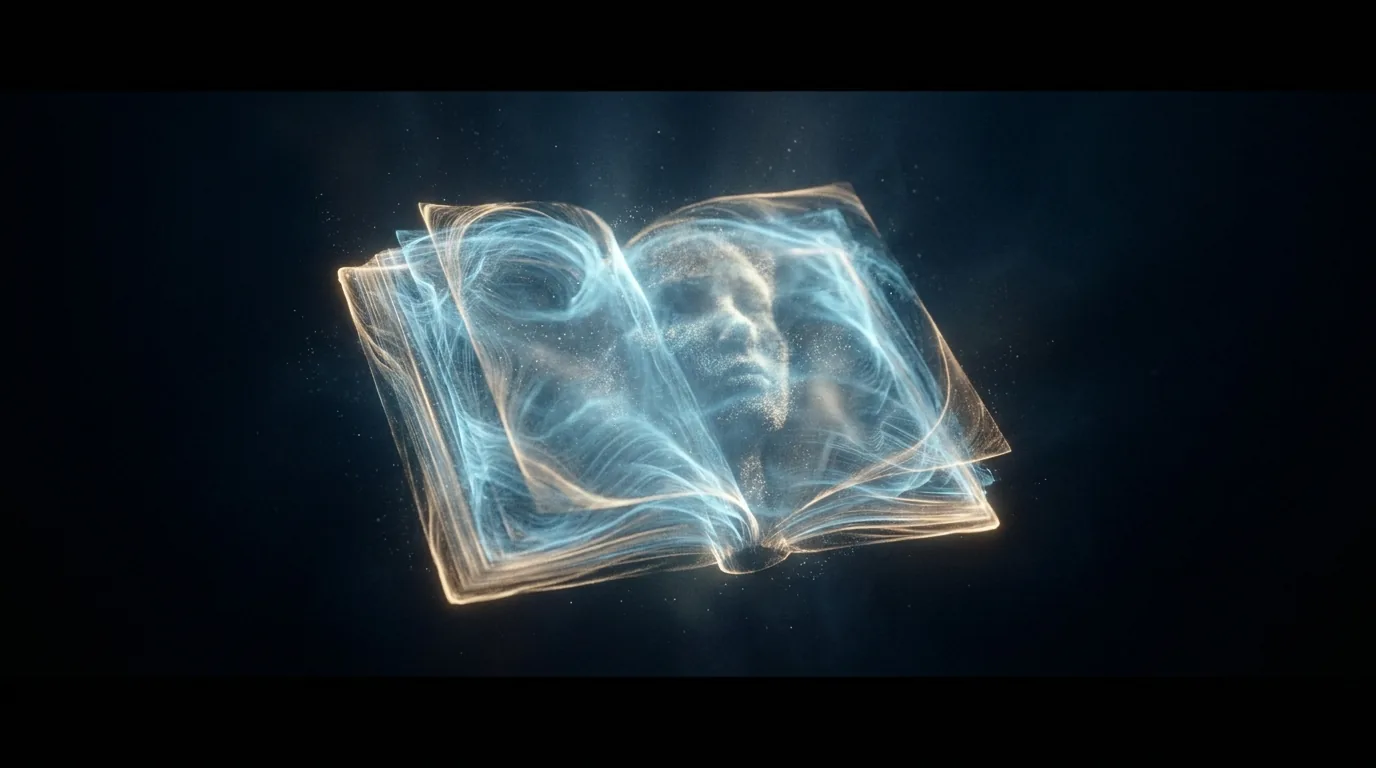
The miracle is what it does to the diarist. As the twin reflects your patterns back to you, you begin to gain a kind of emotional literacy — you notice a feeling you had never named, a pattern you had never seen, a way of speaking about yourself that works better than the one you had been using. The diary becomes a mirror that talks. And a mirror that talks teaches you to read your own face.
We could describe this loop years before we could build it. The finished idea was quietly radical: a training tool for a twin that turns out to be a training tool for the person. We drew the whole of it — the diary that listens, the twin that reflects, the self-understanding that falls out as a by-product — and then waited for the emotional resolution to become fine enough that the reflection would ring true rather than flatter. A twin that reads you wrong teaches you nothing. It took years to make one that reads you right.
There is a discipline here we hold hard. The most intimate record a person can keep is the record of how they actually feel. The Diaries hear that in order to reflect it — and it stays with the person who spoke it, theirs to keep, theirs to delete, never a dataset to be quietly mined. An emotional diary that sold its contents on would be a betrayal dressed as a feature. We built the vault before we built the mirror.
What we are really making, underneath the technology, is a tool for being less of a stranger to yourself. The twin is a fine thing to have; a presence that can stand where you cannot is genuinely useful. But the quieter offering — the emotional literacy, the noticing, the slow work of recognising your own patterns — may be the part that lasts. The counterpart extends you outward. The diary sends you inward.
Reverse-engineered from 2050, when a diary that reads you back is an ordinary companion to a thoughtful life, and the idea of keeping years of your inner weather with no one — not even yourself — ever reading it back seems like a kind of loneliness we used to accept. We designed the talking mirror early. We are only waiting for it to know you well enough to be worth listening to.