What Is Reality?
A question that sounds like philosophy, and works like a design brief.
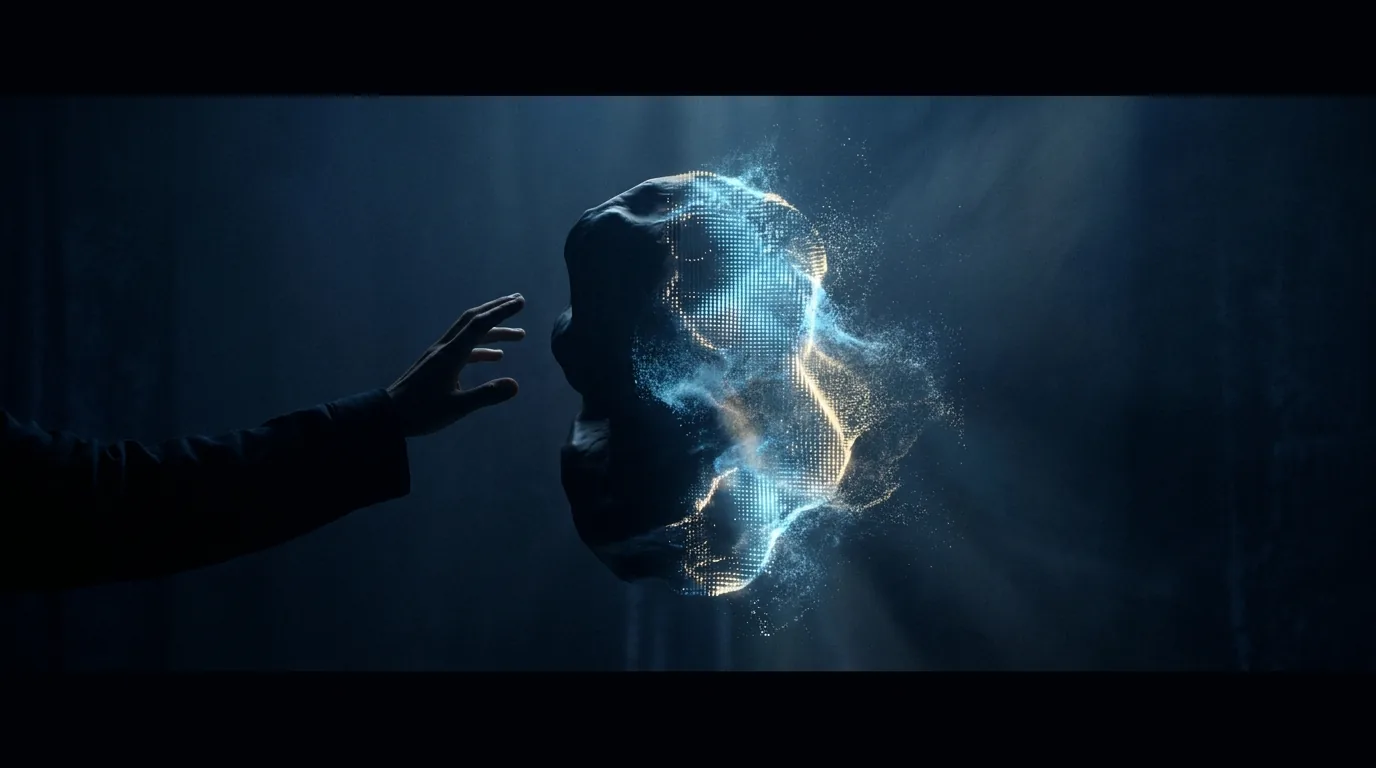
We have a founder who answers a great many questions with a question of her own: what is reality? It sounds like something from a philosophy class, the kind of thing you debate for an evening and set down. In our building it is nothing of the sort. It is a design brief. Every decision we make eventually runs into it, and the whole company is, in some sense, a long attempt to answer it by building rather than arguing.
Here is why the question is practical and not idle. If reality is only what your body can physically touch, then everything we make is a trick — a very good illusion, and nothing more. But if reality is what you experience as real — a presence you can meet at full height, a performance that fills the room you are standing in, a person who is not there and is — then the line between the real and the rendered is not where we assumed it was. And if the line moves, then the question of how to build honestly on the far side of it becomes urgent.
We could feel the weight of that question years before we could build anything that made people ask it. The finished provocation was always there: a twin so present that a person forgets, for a moment, that their friend is a continent away; a concert so present that the living room becomes a venue. We drew those moments in full and waited — because the moment a rendered thing becomes real enough to be mistaken for reality, you inherit a duty you did not have when it was obviously fake. The better the illusion, the heavier the honesty it demands.
This is where the question stops being fun and starts being a discipline. If we can make a presence real enough to be believed, then we are responsible for what we ask people to believe. A reality you build is a reality you are accountable for. The twin has to be truly bound to the person. The memory has to be faithful to who they were. The advert must not exploit the fact that it feels real. The more convincingly we can render a world, the more carefully we are obliged to render it truthfully.
There is a second founder in the building whose instinct answers the question from the other side — who frames all of this as products of light, a lighter and more humane way to be present to one another. Between the question and that instinct sits the whole of the work: what is reality, and what should we be allowed to make once we can build it? Neither founder settles it alone. The company is the argument between them, held in balance.
We do not pretend to have finished answering. We suspect the question is the kind you answer by living inside it rather than by concluding it. But we have decided one thing firmly: that the power to make experiences real enough to be mistaken for reality is not a licence to deceive. It is the opposite. It is the strongest possible reason to be honest.
Reverse-engineered from 2050, when the line between the real and the rendered has moved so far that the question is an ordinary part of how people think about their days — and the answer we care about is not the clever one but the responsible one. We started asking what is reality early, as a design brief. We are still answering it, one honest render at a time.