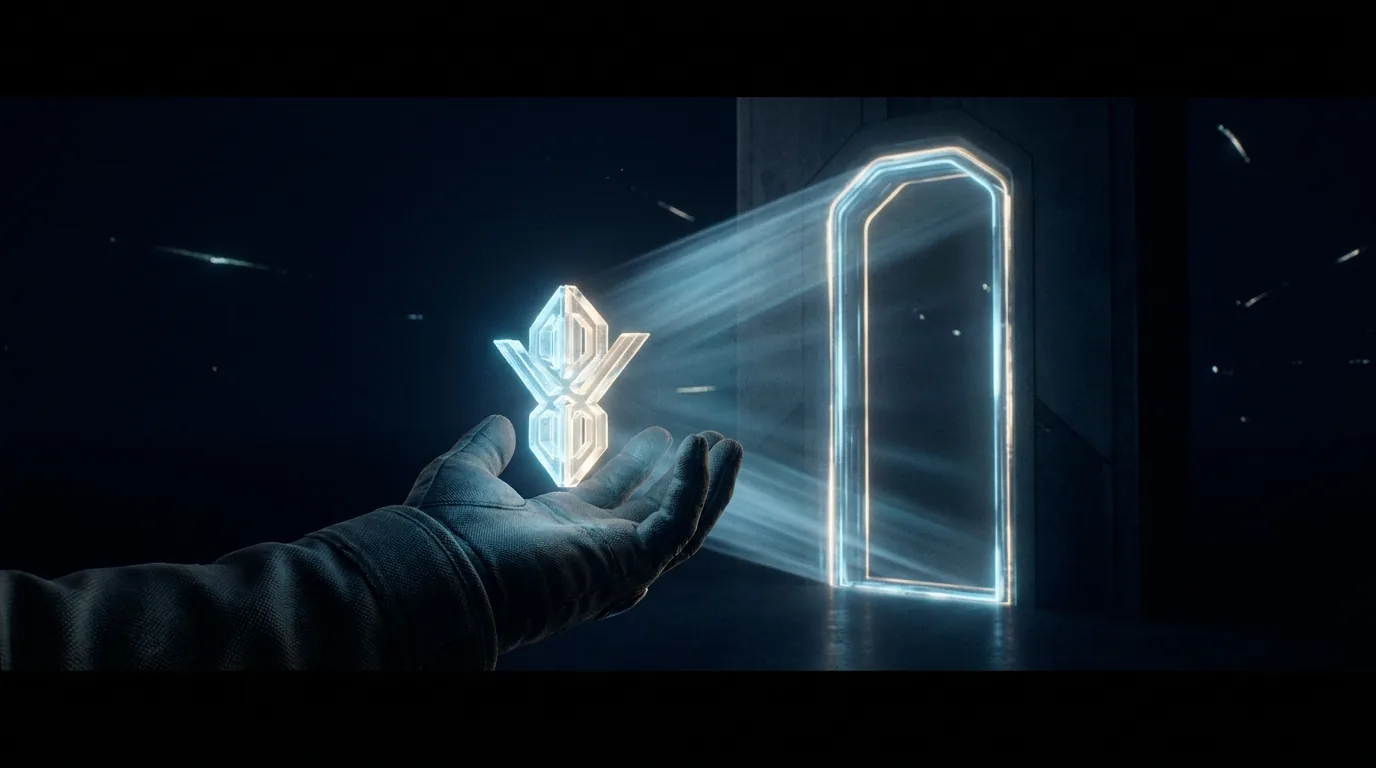
Who You Are at the Threshold
An identity that travels with you, and stays yours.
Every place we build has a threshold, and at every threshold the same question waits: who are you? A Mega Mall wants to greet you with your preferences. A meeting needs to know it is really you. A twin has to be provably bound to the person it represents. All of it depends on a way of carrying who you are from room to room — and on the far harder problem of doing that without turning identity into a leash.
We call the layer that answers Photon ID, and the identity it carries a SID. The plainest way to describe it: an identity that travels with you but stays yours. It brings your preferences, your wallet, your social graph, your twin into a building — and takes them out again when you leave. The recognition happens on your side of the glass. The place does not keep a copy of you. It borrows what you offer, for as long as you offer it, and forgets you the way a good host forgets a confidence.
We could describe this arrangement years before the tools could enforce it. The finished idea was exact and stubborn: on-device processing, granular consent, the person in continuous control of what is shared and with whom, and a location that holds nothing of you but the few details you allow. We drew that discipline in full and waited — because the easy version, the one where the building keeps everything and calls it convenience, could have been built any time. It is the restraint that was hard.
The reason we were so stubborn is that identity is the hinge everything else swings on. Get it wrong and every good thing we make curdles. The building that knows you becomes the building that watches you. The twin bound to you becomes a twin that can be operated against you. The wallet that follows you becomes a wallet that leaks. A spatial world with a careless identity layer is not a convenience. It is the most complete surveillance apparatus ever proposed, wearing the face of a helpful room.
So we drew the line where it belonged: convenience without the surveillance economy that has always been its price. You can be known without being kept. Recognised without being recorded. Greeted by name at a threshold that does not, when you leave, remember your name unless you asked it to. That is not a small feature. It is the difference between a spatial web that serves people and one that farms them.
Underneath the poetry of presence, this is the least romantic and most important thing we do. Before a person can safely be everywhere, they need to own who they are as they go. The identity has to belong to the traveller, not the terminal. We settled that first, because everything else we build inherits it.
Reverse-engineered from 2050, when carrying an identity that is genuinely yours through a spatial world is an ordinary right, and the idea of surrendering yourself at every door in exchange for entry reads like a bargain no one should have had to make. We drew the honest threshold early. We are only waiting for the world to insist on nothing less.